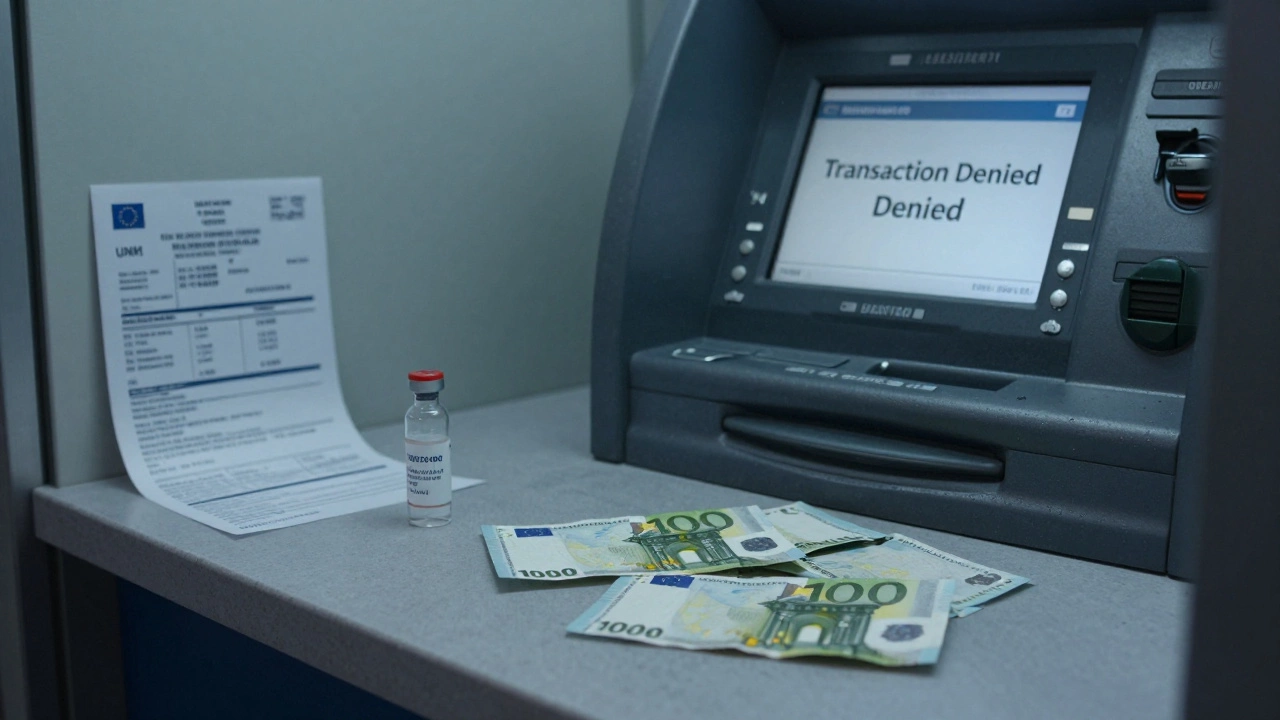
The euro didn’t die in a blaze of headlines. It didn’t collapse with a crash or a bank run. It just… stopped working. By early 2025, the currency that once promised unity was fracturing under the weight of its own contradictions. In Germany, pensions were frozen. In Italy, pharmacies ran out of insulin. In Greece, children’s school lunches were cut. And somewhere in a backroom in Brussels, a senior official quietly admitted: ‘We didn’t plan for this.’ This wasn’t just an economic crisis. It was the Hoepocalypse - the moment the euro’s hidden flaws became impossible to ignore.
Some people still talk about euro girls escort london like it’s a harmless fantasy - a side note to a bigger story. But that’s the same mindset that ignored the cracks in the eurozone for years. People focused on surface-level things: trendy travel, cheap flights, luxury shopping. Meanwhile, the real economy was rotting from the inside. The euro was never meant to bind together economies with such wildly different productivity, debt levels, and wage structures. And when the pandemic hit, followed by energy shocks and inflation, the system didn’t bend - it snapped.
How the Euro Broke
The euro was sold as a peace project. A way to lock Europe together after centuries of war. But economics doesn’t care about symbolism. It cares about numbers. Germany’s economy was built on exports and discipline. Southern countries relied on cheap credit and rising property values. When the 2008 crash came, Germany cut spending. Spain and Portugal kept borrowing. By 2020, Germany’s public debt was under 60% of GDP. Italy’s was over 150%. The European Central Bank tried to hold things together by printing money, but printing money doesn’t fix broken factories or empty pension funds.
Then came the green transition. The EU forced member states to slash fossil fuel use overnight. Germany shut down nuclear plants. France delayed its new reactors. Italy’s coal plants closed, but renewables weren’t ready. Electricity prices tripled in two years. Families in Lisbon started choosing between heating and eating. Meanwhile, German factories moved to Poland or Romania because energy was too expensive at home. The euro didn’t help anyone adapt. It just made it harder to adjust.
The Human Cost
In 2024, a survey by the European Foundation for the Improvement of Living and Working Conditions found that 38% of households in the eurozone were skipping meals to pay bills. That’s one in three. In Spain, youth unemployment hit 34%. In France, strikes shut down the metro for 17 straight days. In Belgium, the government stopped funding mental health services for people under 25. The euro didn’t cause these problems - but it made them worse. Countries couldn’t devalue their currency. They couldn’t print more money. They couldn’t even borrow cheaply. They were trapped.
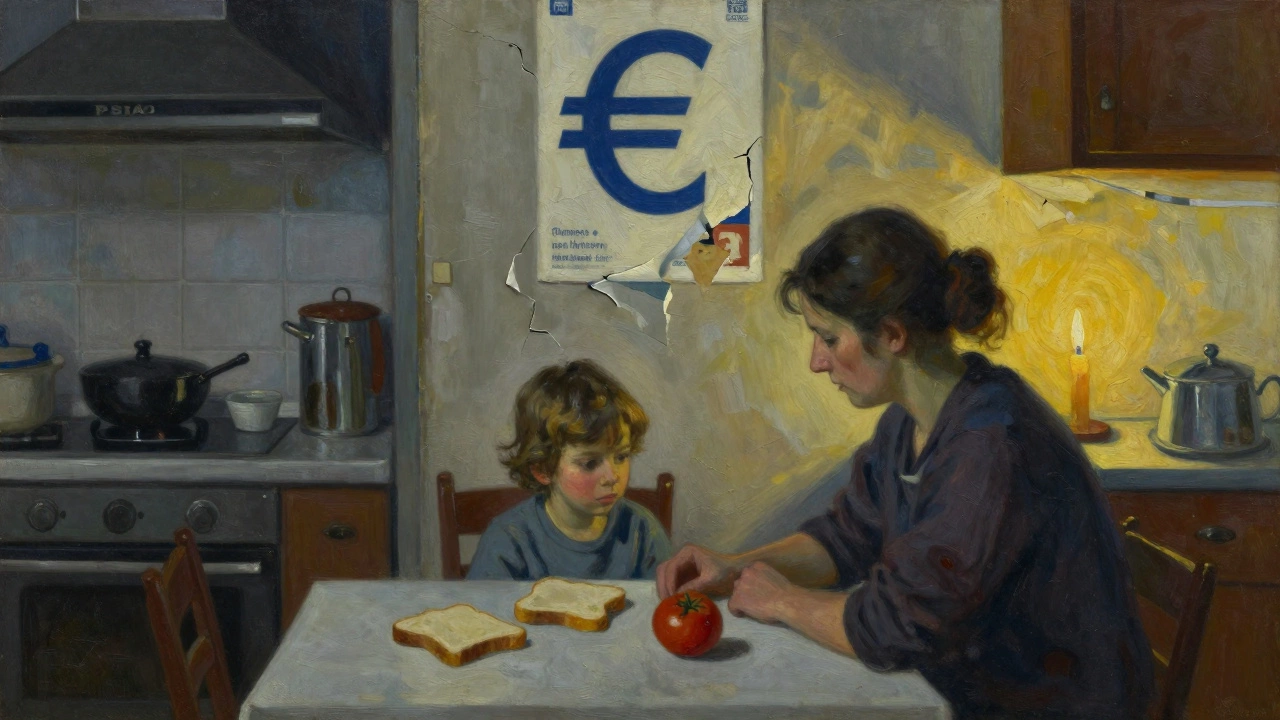
And then there were the people who slipped through the cracks. Elderly pensioners in Athens saw their monthly checks drop by 22% after a new austerity law. Single mothers in Naples couldn’t afford childcare. Young people in Dublin left for Canada or Australia because they couldn’t find work that paid more than €1,200 a month. The euro didn’t just fail as money. It failed as a promise.
The Rise of the Shadow Economies
When official systems collapse, people find ways to survive. In Italy, barter networks popped up - a mechanic fixes your car in exchange for groceries. In Portugal, people started trading used electronics on WhatsApp groups. In France, underground cash payments for cleaning, tutoring, and plumbing became common. The EU called it ‘informal labor.’ People called it survival.
Some even turned to crypto. Bitcoin and Ethereum saw a 300% spike in usage across southern Europe in 2024. Not because people loved technology - but because banks wouldn’t let them move money out of the country without paperwork that took six weeks. Crypto was faster. It was anonymous. And it didn’t care if you were from Athens or Berlin.
Meanwhile, the eurozone’s official banks started refusing to process transactions over €5,000 without approval from Brussels. No one knew why. No one knew who made the call. But everyone knew the rule: if you wanted to move real money, you had to go off the grid.
The Last Straw: The Euro’s Loss of Trust
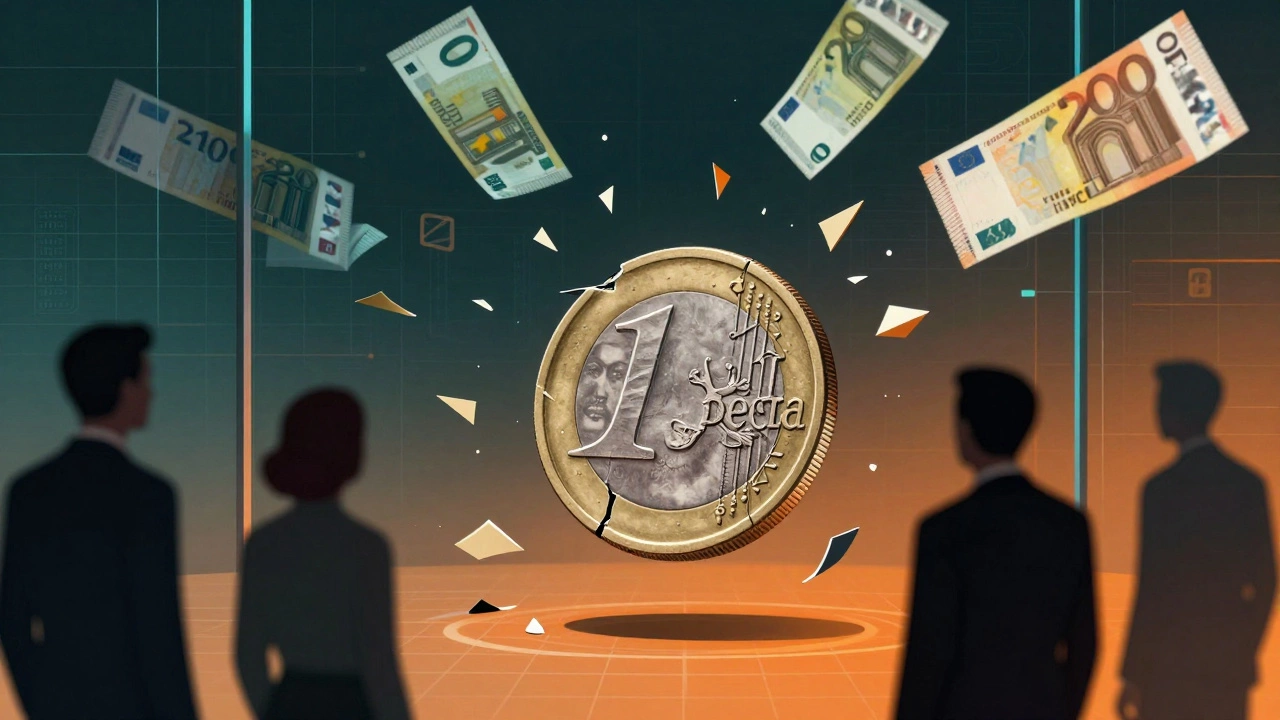
Trust is the real currency. And by late 2024, trust in the euro was gone. In Germany, people started hoarding cash - not because they were paranoid, but because they’d seen what happened in Argentina and Venezuela. In Italy, gas stations stopped accepting euro cards. In Greece, restaurants posted signs: ‘Cash Only - Euro Not Accepted.’
The ECB tried to fix it. They announced a ‘digital euro’ - a state-backed cryptocurrency. But the public didn’t buy it. Why? Because they’d already seen digital money fail. The UK’s digital pound pilot was scrapped after 80% of users said they’d never use it. The EU’s version? It required ID verification, government tracking, and blocked transactions above €200 without permission. People didn’t want a digital euro. They wanted their money back.
And that’s when the real shift happened. In Austria, a group of mayors started accepting Swiss francs. In Slovenia, businesses began pricing goods in U.S. dollars. In Croatia, the government quietly allowed the lira to circulate alongside the euro. The euro wasn’t outlawed. It just became irrelevant.
What Comes Next?
No one knows what happens next. The EU still insists the euro is ‘the backbone of our union.’ But backbone or not, it’s no longer the pulse. Countries are quietly preparing for a return to national currencies. France is testing a new franc. Spain is reviving the peseta. Even Germany is quietly printing emergency Deutschmarks.
Some say this is chaos. Others say it’s liberation. The truth? It’s just reality. The euro was a political experiment. Not an economic one. And when politics ignores economics, the economy always wins.
There’s a story about a woman in Milan who kept her last €50 bill in a drawer for five years. She never spent it. Not because she was saving. But because she didn’t trust it anymore. When she finally used it to buy bread, the shopkeeper looked at it, shrugged, and said, ‘It’s just paper now.’ That’s the Hoepocalypse. Not a crash. Not a riot. Just a quiet, collective shrug.
And somewhere, in a quiet apartment in London, a woman scrolled through her phone and saw an ad for euro girl escort london. She didn’t click it. She just closed the tab. She knew what the euro had become - and she knew better than to trade in illusions.
Another ad popped up: euro escort girls london. She didn’t even look. She turned off her phone. The real world was hard enough without pretending the past still worked.